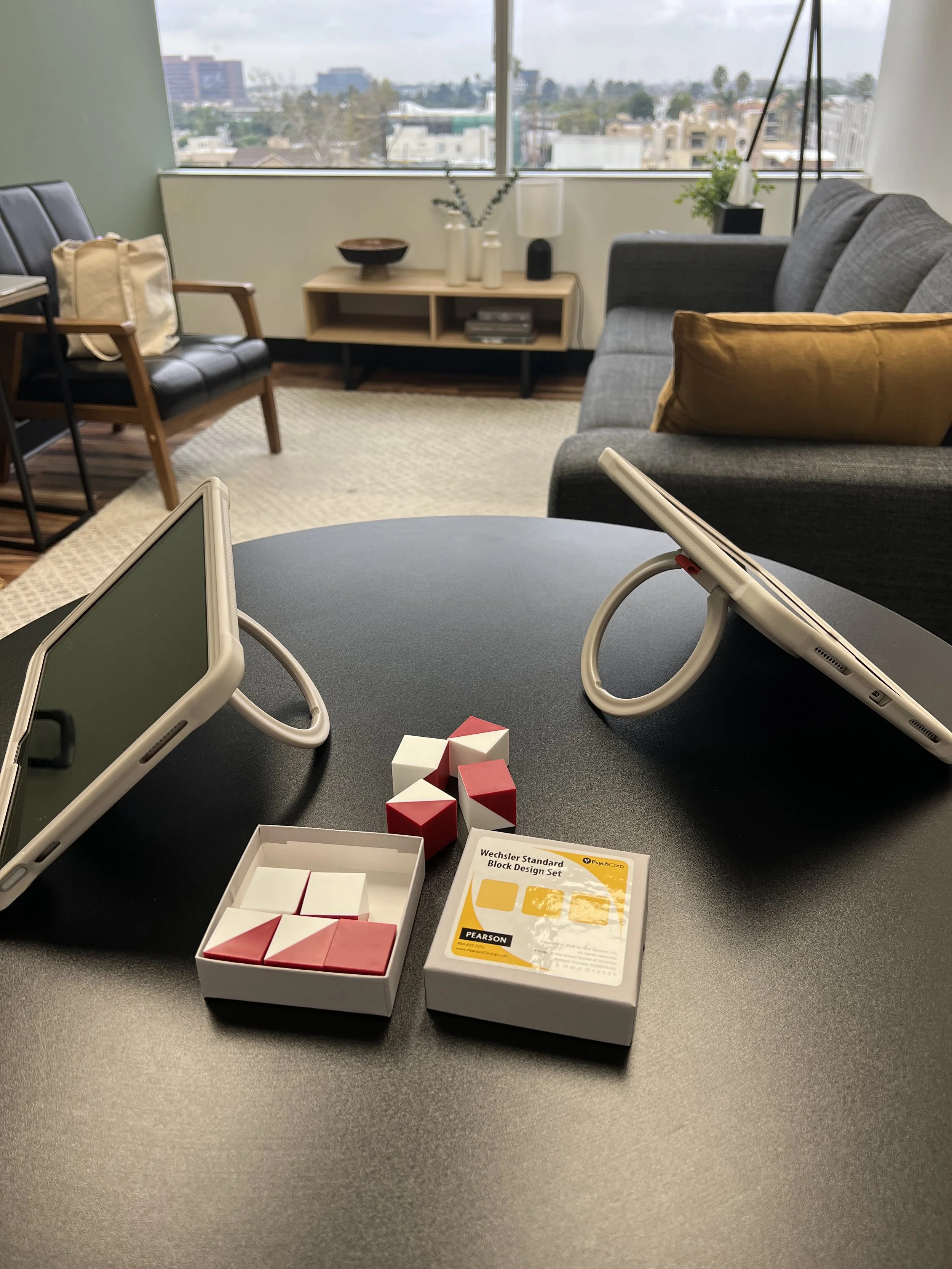
Comprehensive Psychological & Psychoeducational Assessments for Children and Teens
ADHD | Autism | Learning Disabilities | Anxiety | Diagnostic Clarification
If you’re here, you’re probably wondering:
Is this ADHD? Autism? Anxiety? A learning issue? Something else?
Or maybe your child is bright but struggling in school. Maybe teachers are raising concerns. Maybe you just feel that something isn’t clicking and you want clarity.
A comprehensive psychological assessment can provide real answers.
An assessment is a structured, in-depth evaluation that helps us understand how your child thinks, learns, focuses, processes emotions, and functions day to day.
It’s not just a test. It’s a full picture.
We look at:
Cognitive abilities (how your child learns and reasons)
Attention and executive functioning
Academic skills (reading, writing, math)
Memory and processing speed
Social and emotional functioning
Behavior patterns
Autism-related traits (if relevant)
Anxiety, OCD, or mood symptoms (when needed)
The goal is clarity, not labels for the sake of labels. We want to understand what’s happening and what will actually help.
What is a Psychological or Psychoeducational Assessment?
What Does the Process Look Like?
Common Questions Parents Ask
-
We structure testing in a supportive, strengths-based way. Breaks are built in, including time to play and eat a snack. Many children feel proud of completing it.
-
That’s not a problem. We are looking for patterns, not perfection. Struggles during testing often provide useful clinical information.
-
Yes. Our reports are designed to support IEPs, 504 plans, and school-based accommodations.
-
We are out-of-network and provide superbills for reimbursement. Many families use their out-of-network benefits and receive partial reimbursement, depending on their plan. We’re happy to help you understand what to ask your insurance provider.
-
We can discuss your concerns first and determine whether testing is appropriate or if therapy support might be the better starting point.
-
A full comprehensive assessment cost $7,000 with Dr. Soffer and $4,000 with one of our associate psychologists. The fee includes testing, scoring, a detailed written report, and a feedback session with personalized recommendations.
We are an out-of-network practice and provide superbills for families seeking possible insurance reimbursement.
Why Comprehensive Assessment Matters?
When concerns go unexplained, families often try interventions that only partially help.
When we understand the full picture:
Interventions become targeted
School supports become appropriate
Therapy becomes more effective
Parents feel more confident
Kids feel understood rather than “difficult” or “lazy”
Clarity reduces guesswork.

Our Approach
At Kesher Psychological Services, assessments are conducted by Dr. Adi Soffer, licensed psychologist, and her psychological associates, with expertise in ADHD, autism, anxiety, OCD, and learning differences.
We take a thoughtful, developmental, and behaviorally grounded approach. Every recommendation is practical and actionable.
Services are available in English and Hebrew, so families can fully understand and engage in the process.